How long can fish survive in a bag? A healthy, fasted fish in a properly packed bag, with a pure-oxygen headspace, the right amount of water for its size, and a stable temperature, can comfortably handle an overnight trip, with hours to spare. Commercial packing guidance is built around shipments of up to about 36 hours (UF/IFAS FA-120). A pet-store bag tied off with room air is a different thing, and it's meant for the drive home. The interesting part is that in a properly oxygenated bag, oxygen usually isn't what runs out first. (In a bag tied off with air, it is.)
How long can fish survive in a bag? Four clocks, not one
A sealed bag is a closed system with four clocks running at once, and whichever runs out first sets the limit. Oxygen is the obvious one: what's dissolved in the water, plus the reserve in the gas above it. Carbon dioxide is the second. The fish breathes it out, it has nowhere to go, and it slowly acidifies the water. Ammonia is the third, excreted constantly through the gills with nothing in the bag to remove it. Temperature is the fourth, and it sets how fast the other three run.
Packing is really a matter of slowing all four at once. The rest of this article covers each one, and then the moment people rarely think about: opening the bag.
Why pure oxygen instead of air
Air is about 21% oxygen. Water in contact with air at 77°F (25°C) holds roughly 8.3 mg/L of dissolved oxygen at saturation. Replace the air with pure oxygen and the equilibrium figure rises nearly fivefold, to around 39 mg/L, because the amount of a gas water can hold at equilibrium is proportional to that gas's partial pressure above it (Henry's law). That 39 mg/L is a ceiling the bag works toward, not a number it hits the moment it's sealed. Just as important, the gas pocket acts as a reservoir. As the fish uses up dissolved oxygen, more diffuses in from above.
That's why standard practice is to squeeze the air out of the bag, refill the space with pure oxygen and seal it (UF/IFAS FA-120). The same UF/IFAS guidance puts the usual ratio at about 60% oxygen to 40% water in square-bottom bags, and University of Missouri Extension describes bags that are around three-quarters gas (MU Extension MX392). Square-bottom bags are preferred partly because their flat base gives a larger surface between gas and water, so oxygen gets in faster and fish can't get trapped in folded corners. And the alternative is bleak: UF/IFAS notes that fish sealed with ordinary air quickly use up the available oxygen, and mortality is high.
A common claim is that the nitrogen in air causes "gas imbalances" with ammonia in the bag. It doesn't. Nitrogen gas in the headspace is inert and has nothing to do with the ammonia a fish excretes. Another claim is that pure oxygen slows ammonia excretion, as if that were a benefit. In a lab study on rainbow trout, very high oxygen (over 300% of air saturation) made no difference to ammonia excretion in resting fish. In trout already loaded with ammonia, it slowed their breathing and cut excretion, and the ammonia stayed in their blood instead (Eom et al. 2020). So any slowdown means ammonia staying in the fish, not less of it being made, and it isn't why shippers use oxygen. The big levers on ammonia output are how recently the fish ate and how warm the water is, which is why fish are fasted before shipping and kept from overheating. Oxygen's job is simply to keep the oxygen clock from running out first.
The carbon dioxide trade-off: an acidic bag is a safer bag, for now
With oxygen dealt with, CO₂ becomes the main story. Every fish in the bag breathes it out, and in water it forms carbonic acid, so the pH falls over the trip. Even in well-buffered transport water, pH can drop by a full unit (University of Missouri Extension MX392). How far it falls depends on how much CO₂ builds up and how much alkalinity the water has (SRAC Publication 3903, Shipping Fish in Boxes).
High CO₂ has a real cost. It reduces how well a fish's blood takes up oxygen, and extension guidance flags levels above about 20 mg/L (UF/IFAS FA-119; MX392). But the falling pH does something protective. Ammonia in water exists in two forms: toxic un-ionized ammonia (NH₃) and much less toxic ammonium (NH₄⁺). The lower the pH, the more of it sits as ammonium.
| pH (at 79°F / 26°C) | Share of total ammonia present as toxic NH₃ |
|---|---|
| 6.5 | 0.19% |
| 7.0 | 0.60% |
| 7.5 | 1.9% |
| 8.0 | 5.7% |
Calculated from the standard Emerson et al. equilibrium used in UF/IFAS FA-16, Ammonia in Aquatic Systems.
Every full pH unit is roughly a tenfold change in the toxic fraction. So a bag that has drifted down to pH 6.6 overnight can hold a fair amount of total ammonia while the fish is exposed to very little of the toxic form.
A common suggestion is to buffer the bag so the pH doesn't fall. That's only half right. Buffering has a place: SRAC recommends shipping water with a total alkalinity of at least 100 mg/L, so the pH doesn't crash in very soft water. But holding the pH up also holds the ammonia in its toxic form. In one 48-hour guppy packing trial, bags buffered with tris held at about pH 7.6 instead of 7.0 (Lim, Dhert and Sorgeloos, Ornamental Fish International). The trial reported toxic free ammonia about ten times higher in the buffered bags (8.33 vs. 0.82 mg/L). That can't come from the pH shift alone, and 8.33 mg/L of un-ionized ammonia would be far past the 2 mg/L at which UF/IFAS says sensitive fish typically die, so it is probably total ammonia or a unit slip. Calculated from the pH change alone, the 0.6-unit rise on its own roughly quadruples the toxic share, so at the same total ammonia the buffered bags would carry about four times as much of the toxic form. Some shippers add zeolite, a mineral that absorbs ammonium, at 15 to 20 g per liter (SRAC 3903). That attacks the ammonia itself instead of fighting the pH.
The dangerous moment: opening the bag
The moment the bag is opened, the CO₂ that built up overnight starts to escape and the pH begins to rise. If tank water is then poured or dripped in, and many tanks run at pH 7.5 or higher, the pH rises faster still. The ammonia is still there. It just shifts back to the toxic form.
Here's an illustrative example at 79°F (26°C):
- A bag arrives with 4 mg/L total ammonia at pH 6.6. The toxic share is about 0.24%, or roughly 0.01 mg/L NH₃.
- You open the bag and add an equal volume of tank water at pH 7.8. Total ammonia halves to 2 mg/L. At first the mix stays fairly acidic, because the bag water is loaded with CO₂ (it jumps higher sooner if the bag water is much softer than your tank water). But the CO₂ gasses off with every minute the bag sits open, and the mix climbs toward the tank's pH. Once it gets there, the toxic share is about 3.7%, or roughly 0.07 mg/L NH₃.
Halving the ammonia still left the fish about seven times worse off once the pH caught up, and it pushed the level past 0.05 mg/L, the point at which gill damage is reported (FA-16, Texas A&M AgriLife edition). The culprit is time with the bag open, not the dilution itself. AZA's Fish Transport Manual makes the same point about long shipments: normal acclimation "will drive off carbon dioxide faster than the ammonia is being diluted" (AZA Fish Transport Manual). Once the bag is open, the clock is running: the longer a fish sits in a mix of its own ammonia and rising pH, without a binder, the more toxic ammonia it's breathing. That's why the steps below add an ammonia binder the moment the bag opens, and use a steady, measured flow rather than an open-ended drip.
Step by step, from the moment the box arrives:
- Dim the lights. Turn off the aquarium lights and dim the room before you open the box. The fish have spent hours in the dark, and sudden bright light adds stress.
- Record the unboxing. Video the box being opened and each bag being checked, in case you need to file a claim with the seller.
- Float the sealed bag about 15 to 30 minutes, just long enough for the temperatures to match. Keep it closed while the temperatures even out. If a fish looks weak, skip the float and go straight to the bucket. Even a fish that looks dead deserves the full process, because some recover. AZA's Fish Transport Manual says getting the bag and tank within 1 to 2°F usually takes only 10 to 15 minutes (AZA Fish Transport Manual). A larger bag or a bigger temperature gap takes longer, and University of Missouri Extension advises at least 30 minutes (MU Extension MX392). If a bag arrives badly chilled, AZA's advice is to lay it on its side, unopened, in a dim room until it nears room temperature (usually about 30 minutes), then float it as normal (AZA Fish Transport Manual).
- Move the fish into a bucket and add an ammonia binder right away. Cut the bag open and release the fish and its water into a clean bucket, leaving just enough water to cover the fish. Add an ammonia binder to that water as soon as the bag is open, before any tank water goes in. Don't skip it: opening the bag lets CO₂ escape, and the fish will sit in its own bag water for hours while the pH climbs and more of the ammonia turns toxic. SRAC's Shipping Fish in Boxes warns that raising the pH of a high-ammonia bag "can lead to problems" and suggests ammonia-binding agents (SRAC 3903).
- Run a measured flow of tank water into the bucket. Run airline tubing from the tank to the bucket as a siphon, and use a small valve or a knot to set a steady flow, faster than a drip. Aim for about 1 mL per second per liter of water the fish starts with in the bucket. At that rate the bucket reaches about 90% tank water in around 2.5 hours; at one drop a second it would take about 50 hours (AZA Fish Transport Manual). Check the rate rather than guessing: hold a measuring cup under the line for one minute. You should collect about a quarter cup (about 60 mL) for each liter of water the fish starts with in the bucket: about 2 tablespoons for half a liter, or half a cup for 2 liters. Adjust the valve until you do. The bucket keeps filling, and by the end it holds about 10 to 12 times the water you started with, so use a bucket big enough to hold about 12 times the starting water: about 12 liters (just over 3 gallons) for each liter of bag water. A standard 5-gallon bucket handles up to about 1.5 liters (6 cups) of bag water. If you have a pH test, the bucket is ready when it reads within about 0.2 of the tank. Keep the bucket aerated with an air stone and warm, since AZA notes flow setups may need both. A few drops of methylene blue per gallon in the bucket is a handy check on the mixing: as tank water flows in, the blue fades. Watch the fish closely throughout.
- Net the fish into the tank or quarantine tank. Throw the bucket water away; never add shipping water to your aquarium.
- Hold off on food. Wait a couple of hours or more before offering anything, and don't be surprised if a new fish ignores food until the next day. After an overnight trip, that's normal.
All told, the flow takes about 2 to 3 hours. Measure it rather than just letting it run.
What shortens survival time in a bag
- Heat. Metabolism rises with temperature, so a warm fish uses oxygen and produces CO₂ and ammonia faster. Water Temperature and Metabolism covers that. Cold does its own damage, and tropical species chill badly.
- A full gut. UF/IFAS notes that fish need about 1 to 3 days to empty their digestive tracts, and a fed fish fouls its bag water much faster.
- Too much fish for the water. Large fish get their own bags and more water. Stocking density drives every clock.
- Delays. A missed delivery turns a comfortable overnight trip into a two-day one.
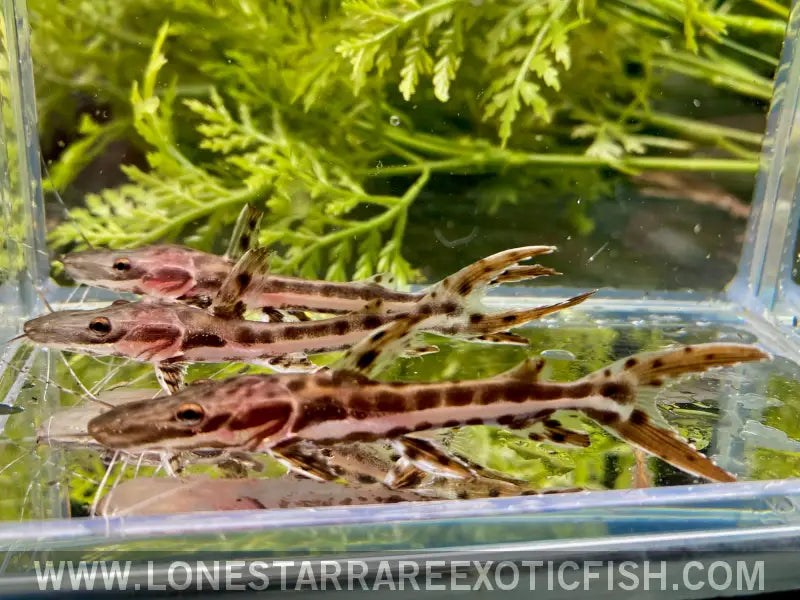
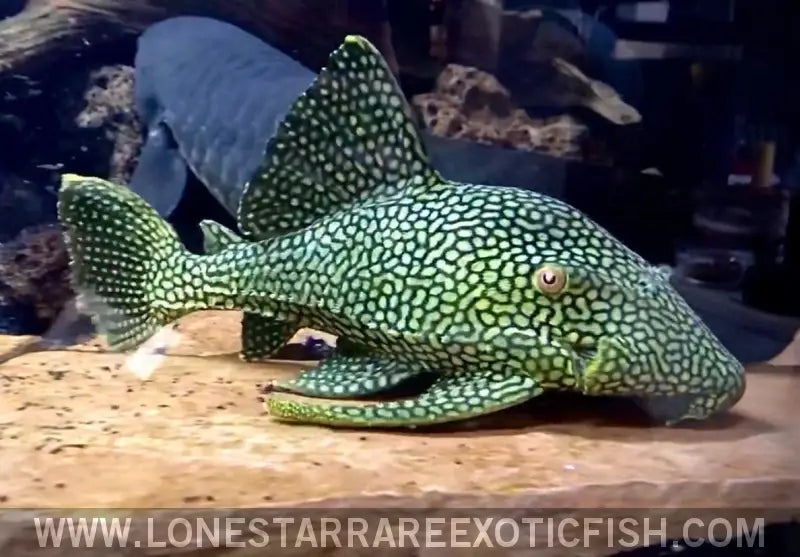
- Spines and teeth. Catfish, plecos and big predators can puncture a bag. A slow leak loses both water and the oxygen reserve, which is why many shippers double- or triple-bag spiny fish (SRAC 3903).
What a well-packed shipment looks like
A careful shipper controls most of the clocks above before the box ever leaves. Here's what good packing looks like, and what to check when the box arrives:
- Fasted fish. Fish should be held without food for a day or more before they ship, so they foul the bag water less. It's fair to ask a seller how long they fast fish before shipping.
- Overnight service, early in the week. Live fish should travel by next-day service, shipped early enough in the week that a box isn't stranded in a carrier hub over a weekend.
- Insulation and temperature control. Expect an insulated box or liner, with a heat pack in cold weather. A seller who holds a shipment for extreme temperatures or storms is protecting the fish.
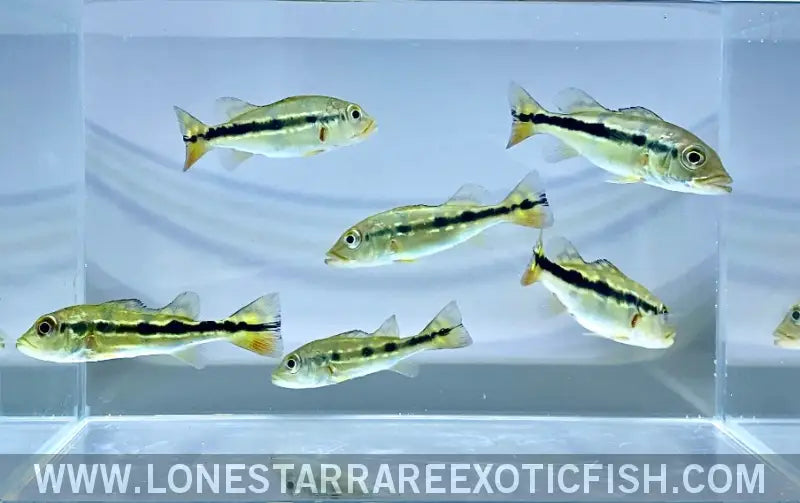
- Bags and water. Each bag should be sealed and firm, with a headspace of pure oxygen, and spiny fish double- or triple-bagged. The bigger the fish, the more water it needs in the bag, and the same rules apply to big predators such as peacock bass.
- On arrival. Check that each bag is intact, still inflated and not leaking, and look at the water and the fish before anything is opened. Record the unboxing, including each fish in its sealed, unopened bag, in case you need to file a claim with the seller. Many sellers require photos or video within a short window after delivery, so check their policy.
For more on what to expect when you buy fish online, see that guide.
Before you order a fish, check whether your state allows it. The illegal fish by state list covers all 50 states and the federal rules.
FAQ
How long can a fish survive in a bag from the pet store?
Treat it as hours, not a day. Store bags are usually tied off with room air, and with air alone the oxygen goes quickly, especially in warm weather. Float the bag to match temperature and get the fish into its tank.
Is drip acclimation bad?
An unmeasured drip is the problem, not gradual mixing. Mixing slowly is the standard extension advice, and it protects fish from sudden swings in temperature and pH. The risk is ammonia: once the bag is open, CO₂ escapes and the pH climbs while the fish's ammonia is still in the water. AZA's Fish Transport Manual, written for public aquariums, names drip acclimating "for hours and hours without actually measuring the rate of inflowing water and the differences in water chemistry" as a common error. A slow drip barely moves the water: at one drop a second, a liter of bag water takes about 50 hours to reach 90% tank water. The manual says "drip acclimation" is a misnomer and should be called "flow acclimation," because the rate should be faster than a drip. A flow of about 1 mL per second per liter of water the fish starts with in the bucket gets there in about 2.5 hours, and wholesalers use this kind of setup for big batches (AZA Fish Transport Manual). That measured flow is the method to use after an overnight shipment. Add an ammonia binder the moment the bag opens, keep the bucket aerated and warm, check the flow rate, and watch the fish closely throughout. After a shipment of more than 36 hours, though, AZA says fish can't be acclimated in their shipping water without risk.
Should I add air to a shipping bag if the fish looks stressed?
No. Opening the bag swaps a pure-oxygen headspace for air, which contains less oxygen, and it starts the pH rise. Leave it sealed, float it to match the temperature, then follow the acclimation steps above.
How long can fish survive in a bag with pure oxygen?
For healthy, fasted fish packed at a sensible density and kept at a stable temperature, an overnight trip is routine, and UF/IFAS packing tables are built for trips of up to about 36 hours. Longer trips are possible, but the margin shrinks with every hour.
Does the tank water need to be ready before the fish arrives?
Yes. It should be dechlorinated, temperature-matched and cycled. If your utility uses chloramine, read Chloramine in Aquariums first, because treating chloramine also releases ammonia.