Spirulina for fish is one of the most common ingredients in flakes, pellets and wafers, especially foods aimed at plant-grazing fish. It's a good ingredient: high in protein, easy to digest and packed with pigments. But a lot of what's written about it is overstated. Here's what spirulina actually is, what the research shows, and which fish get the most out of it.
What spirulina actually is
Spirulina isn't a plant or a true alga. It's a cyanobacterium, a photosynthetic bacterium, that grows in coiled filaments. The spirulina sold as food and feed has long been called Arthrospira, mainly A. platensis (FAO 2008). In 2019, researchers showed that the commercial strains, sold as A. platensis, A. maxima and A. fusiformis, belong in a separate genus, which they named Limnospira. The trade still calls it spirulina (Nowicka-Krawczyk et al. 2019).
Spirulina-type cyanobacteria turn up in many places, from soil and marshes to freshwater, brackish water and hot springs. But the commercial species grow best somewhere very different: warm, highly alkaline, often salty soda lakes in Africa and Mexico, at pH 8.5 to 11. In the alkaline lakes of East Africa's Rift Valley, spirulina can dominate almost completely (FAO 2008). Today most of it is farmed in open ponds or tanks.
What's in it
Dried spirulina is about 59 to 65% protein. Its cell walls lack cellulose, so it's easier to digest than many green algae (FAO 2008). It's also rich in pigments:
- Phycocyanin, the blue pigment that, together with chlorophyll, gives spirulina its blue-green color
- Carotenoids, including beta-carotene and zeaxanthin
Goldfish and koi can convert zeaxanthin, the main yellow carotenoid in spirulina, into astaxanthin, the red pigment behind many color foods. Cichlids and many other fish can't make that conversion, though many can deposit spirulina's yellow pigments directly. That's why spirulina turns up in color-enhancing formulas. Our color enhancing food guide explains what pigment foods can and can't do.
Spirulina for fish: what the research shows
The best overview is a 2023 meta-analysis. Its spirulina section pooled 36 studies on 17 fish species, mostly juvenile tilapia, carp and catfish. Growth improved in about 70% of those species. The clearest gains were in tilapia and mullets, with a small gain in airbreathing catfish. The authors found no consistent difference between plant-eating, omnivorous and predatory fish, and in carp-family fish, the group that includes goldfish and koi, growth actually dropped as spirulina levels rose. Results varied widely between fish families and experiments, and the authors noted considerable uncertainty (Trevi et al. 2023). Most of those studies were on farmed food fish, not aquarium species.
So spirulina is a useful ingredient, with real but variable benefits. Claims that it prevents disease, replaces medication or works as a cure-all go well beyond the evidence.
Which fish benefit most
Research hasn't ranked aquarium fish by how much they gain from spirulina, so this is based on what fish eat in the wild and on hobby practice. Spirulina makes the most sense for fish that graze plant matter, algae and biofilm:
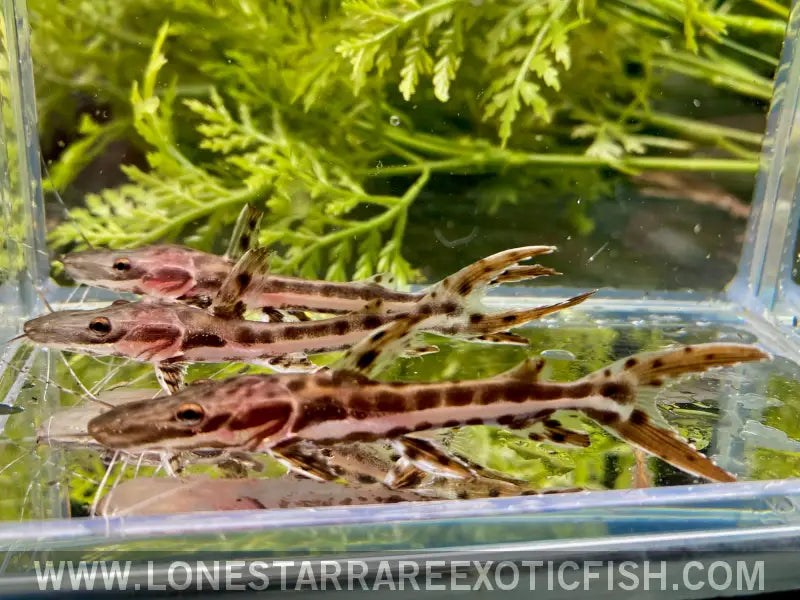
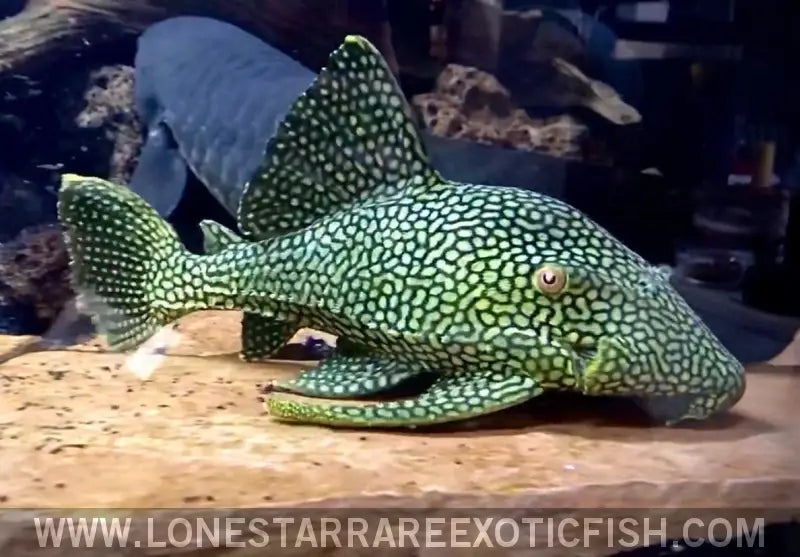
- Many plecos and other algae-grazing catfish. Sinking wafers that contain spirulina are a common staple. See our plecos and catfish collections.
- Herbivorous and omnivorous cichlids and livebearers, as one part of a mixed diet.
- Omnivores in general, where it adds variety and pigment.
Predatory fish don't need it. A small amount in a mixed food won't hurt them, and in one farmed trout study a tiny amount even helped growth, but carnivores do best on foods built around animal protein.
Wood-eating plecos need more than spirulina
Some plecos rasp on wood. Research on these fish found they digest wood poorly, lose weight on wood alone and pass it through their gut in under four hours. They're really detritivores that feed on the soft, decaying film on wood (German 2009). Keepers usually give them driftwood to graze plus vegetables and sinking plant-based foods, not spirulina alone (hobby practice). If you're unsure what a particular pleco eats, ask us before you buy.
Reading the label
On US animal food labels, ingredients are listed in descending order by weight (21 CFR 501.4). A food called "spirulina" something may still list fish meal, wheat or soy first and spirulina well down the list. If you want a spirulina-heavy food, check that it's near the top.
How to feed it
- Use it as part of a varied diet. No single ingredient covers everything.
- Feed what's eaten in a few minutes. Sinking wafers for slow grazers can stay longer, but remove leftovers before they rot. Uneaten food becomes ammonia and then nitrate. If softened wafers tint the water blue-green, that's phycocyanin, a water-soluble pigment, and a sign to pull leftovers sooner and feed a little less (hobby observation).
- Feed after dark for nocturnal fish. Many plecos and catfish eat mostly at night, so food dropped in at lights-out reaches them before faster fish clean it up. New plecos often won't eat with the lights on, so a wafer at lights-out, with leftovers removed in the morning, is the easiest way to check they're eating (hobby practice).
- Store it sealed, cool and dark, like any food with pigments that break down over time.
FAQ
Is spirulina good for fish?
For most herbivores and omnivores, yes, as part of a varied diet. It's high in protein, easy to digest and adds pigment. It's not a cure-all.
Can plecos live on spirulina wafers alone?
Not ideally. Algae-grazing plecos do well on wafers plus vegetables. Wood-eating plecos are usually given driftwood to graze as well (hobby practice). Give them variety.
Does spirulina improve fish color?
It can help. Goldfish and koi turn spirulina's zeaxanthin into red astaxanthin, and many other fish deposit its yellow pigments directly, which can brighten yellows and oranges. Cichlids and most other fish can't make astaxanthin themselves, so for deeper reds a food that contains astaxanthin is the more direct route.
Is spirulina a plant?
No. It's a cyanobacterium, a photosynthetic bacterium, sold under the name spirulina.