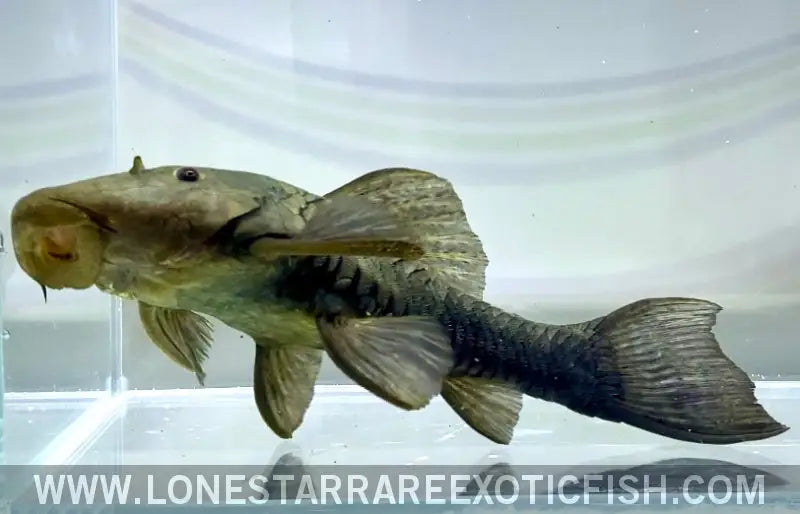
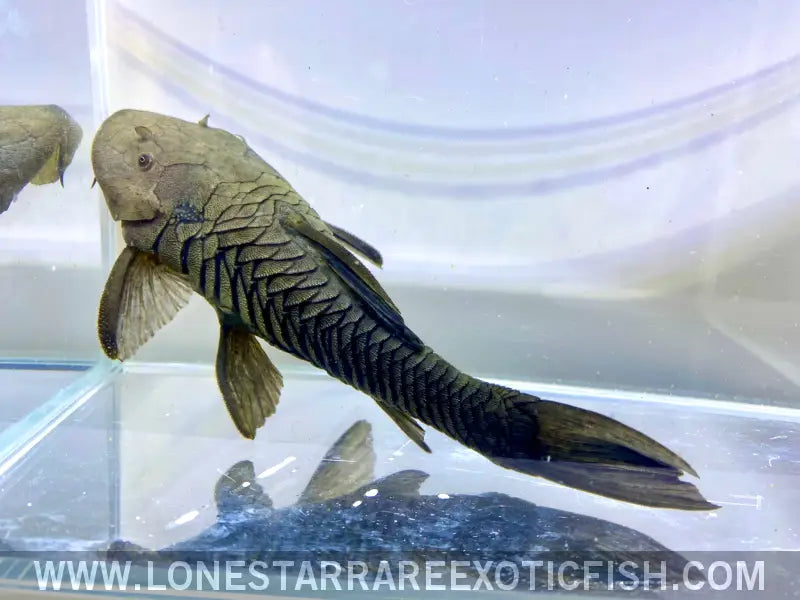
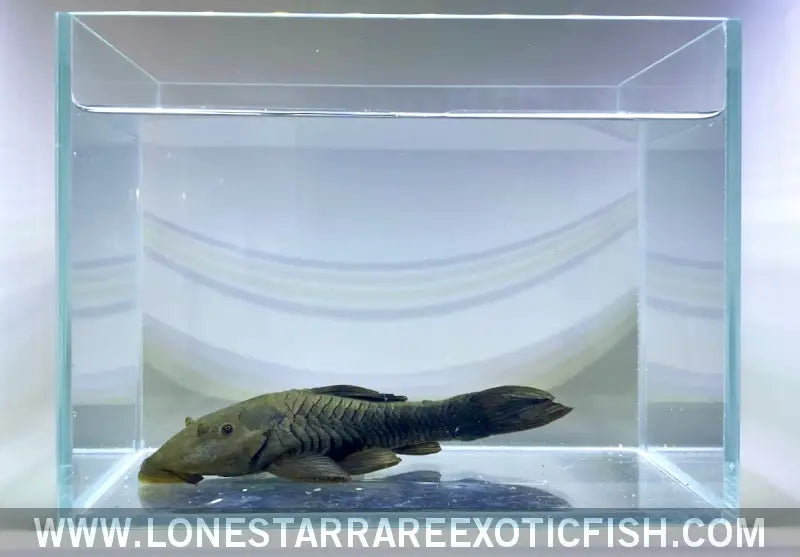
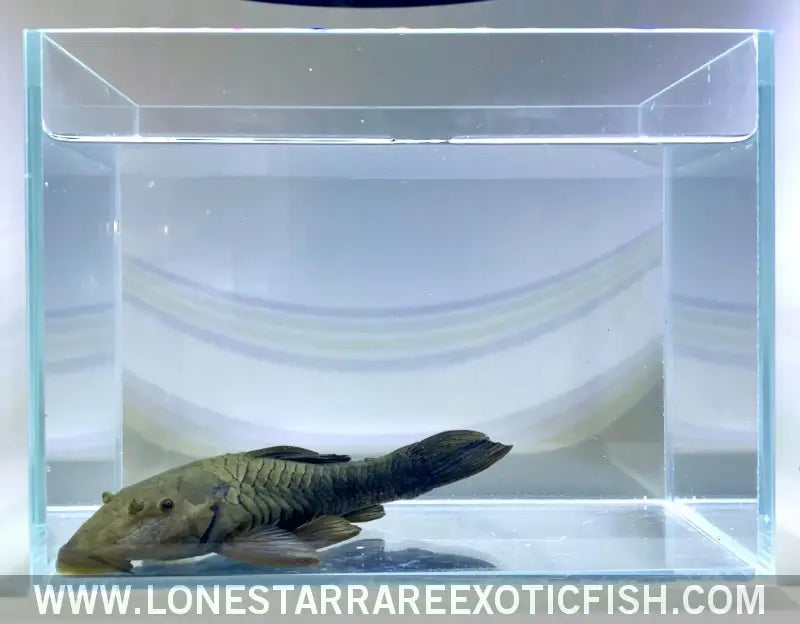
Rhinelepis aspera is a big, plain, dark grey pleco from the São Francisco and upper Paraná River basins of Brazil, with records in Uruguay. It has no spots or stripes, just heavy rough plates and a wide, blunt snout, which is where the bullnose name comes from. Other names: Black Armored Catfish, Cascudo-preto.
In the wild
It lives in large rivers and their main channels, where it feeds on fine organic detritus and mud from the bottom, with very little algae in its diet. It is a migratory species. It is the biggest loricariid in the São Francisco basin, with wild fish recorded to about 21 inches (54 cm) total length. Wild fish have been aged to 10 years. Captive lifespan is not well recorded, but plan for a long-lived fish.
Feeding
- Sinking pellets and wafers
- Blanched vegetables such as zucchini and sweet potato
- A small amount of meaty food, such as frozen bloodworms, a couple of times a week
Temperament and tank mates
Large plecos can compete for the same cave or spot, so give each one its own cave or piece of wood. Like most plecos, it is usually most active after lights out. Good tank mates are large South American cichlids such as Oscars, Severums and Geophagus, arowanas and large characins, large catfish too big to be eaten, and other large loricariids. Skip small fish, which can be hurt as it moves around the tank.
Tank
Juveniles can start in 75 to 125 gallons. Adults need 300 gallons or more. It produces a lot of waste, so use a canister or sump with strong filtration and steady water movement.
-
Substrate: Sand or smooth gravel
-
Decor: Large caves, rocks and driftwood for shelter
-
Lighting: Any; it does not depend on algae
Water
-
Temperature: 74 to 82°F (23 to 28°C)
-
pH: 6.0 to 7.5
-
GH: 5 to 15 dGH
-
KH: 4 to 10 dKH
Breeding
It has not been bred in home aquariums. It is a migratory river spawner that releases all its eggs in a single batch, and the eggs are adhesive and sink to the bottom. In Brazil it has been spawned in hatcheries by hormone injection, with eggs hatching in about 42 hours at 75 to 77°F (24 to 25°C). No parental care has been recorded.
Conservation
Listed as Near Threatened by the IUCN (2020). Brazil's national assessment rates it Least Concern but conservation dependent, with steep declines near dams.
Restrictions:
Vermont limits imports of armored catfish to listed genera, and Rhinelepis is not one of them, so a permit from Vermont Fish & Wildlife is likely needed. Check your state's rules before ordering.
Difficulty: Advanced, because of its adult size and waste output.