Common Name: Dull Eyed Royal Pleco
Scientific Name: Panaque sp. (L191), an undescribed species (often sold as Panaque cf. nigrolineatus)
Other Names: L191, Broken Line Royal Pleco
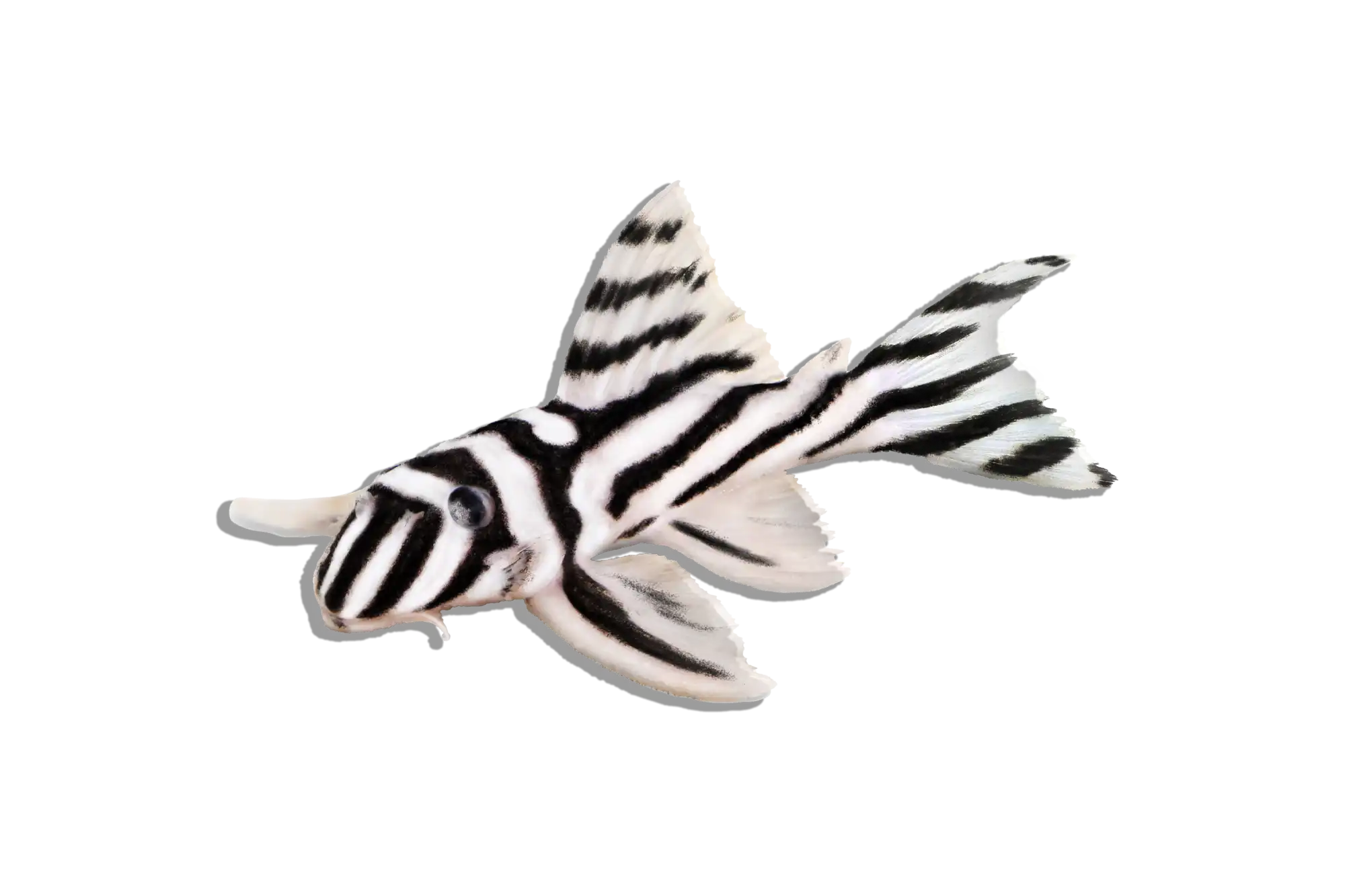
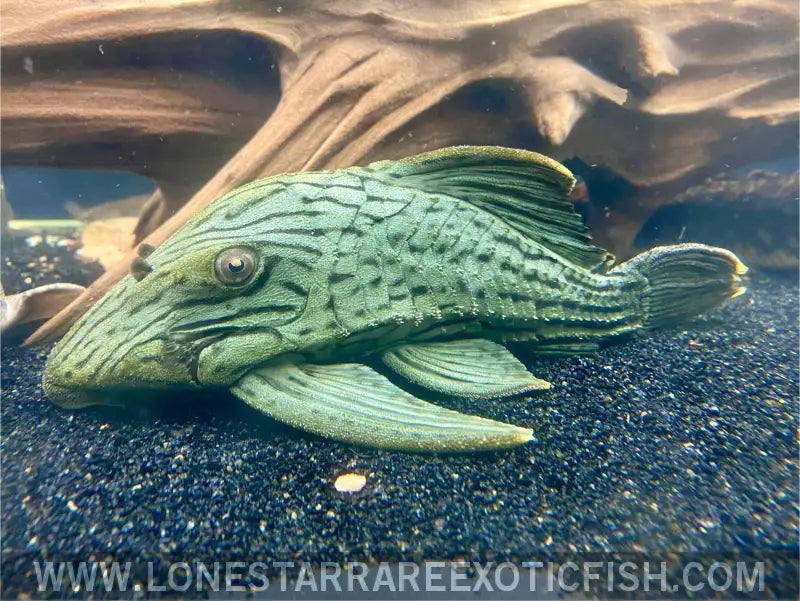
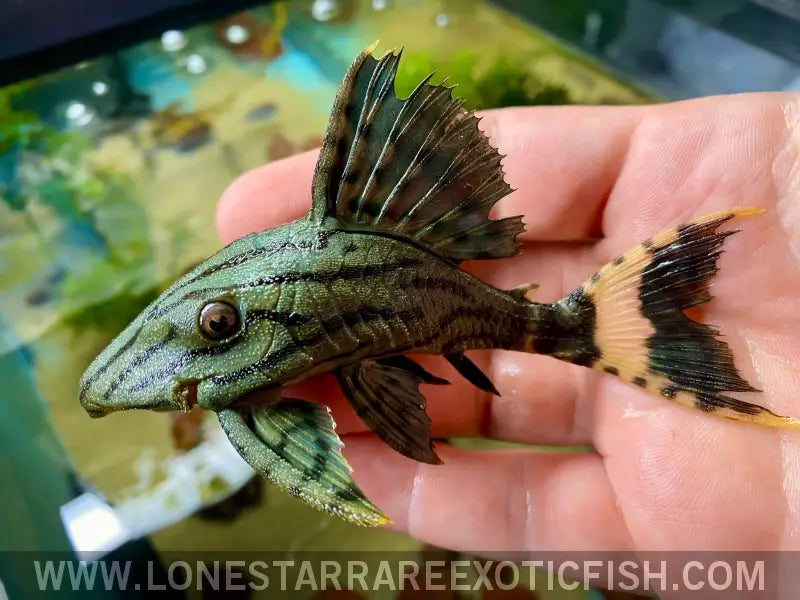
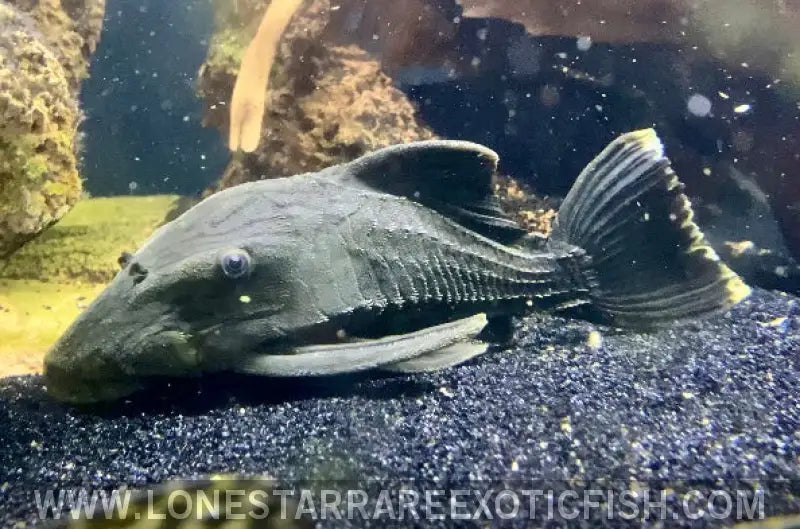
The L191 Dull Eyed Royal Pleco is one of the royal plecos, a group of large, wood-eating Panaque catfish. Its closest relatives are still debated; it has been linked to P. nigrolineatus, P. titan and P. suttonorum. It has a robust, olive-green body with black stripes running lengthwise from head to tail, often broken into dashes. Young fish have a green shimmer, a white ring at the base of the tail, a clear "windowed" tail fin and white fin tips. Adults turn grayer with age, and the pattern varies a lot between individuals. The "dull-eyed" name comes from its eye color: L191 has a yellowish, grayish or blackish eye, while the closely related L190 Royal Pleco has a red eye. In young fish this is the easiest way to tell them apart. It also has a powerful mouth with large, spoon-shaped teeth built for gouging wood, a distinctive habit that is essential to its diet. Its looks and wood-eating habits make it popular with aquarists.
Habitat and Distribution: The Dull Eyed Royal Pleco is known only from Colombia, in the Río Caguán, a tributary of the Río Caquetá (called the Japurá in Brazil) in the Amazon basin. It lives in rivers, among fallen trees and tangles of submerged wood, which it uses for shelter and food.
Size and Lifespan: In aquariums, adults typically reach 12-16 inches (30-40 cm), and large individuals can pass 16 inches. The largest recorded size is about 20 inches (50 cm) not counting the tail. Growth is slow, so it takes years to reach full size. Royal plecos are long-lived. Hobby references commonly give 10-20 years, and some royal plecos have been reported living past 20 years with good care. There's no scientific lifespan study for L191 itself, so plan on a commitment of 20 years or more.
Diet and Behavior: The Dull Eyed Royal Pleco is a wood-eating detritivore. In the wild it gouges soft, waterlogged wood and eats the wood along with the film of microbes, fungi, algae and decaying material on and in it. Its spoon-shaped teeth rasp wood into fine shavings, but research on royal plecos found they digest very little of the wood itself. Most of the nutrition comes from the microbes and decaying material that come with it, so think of driftwood as both the plate and part of the meal. Driftwood is a must. Grazing on it is their core natural feeding behavior, it supplies the fiber and biofilm they feed on, and long-term health depends on it, so keep a constant supply in the tank. Soft woods they can gouge (and that will slowly be eaten away) are best. Offer sinking algae wafers and vegetable-based tablets as a staple, along with fresh vegetables like zucchini, cucumber, peas, green beans and sweet potato or other tubers. A mostly plant-based diet is best; protein-rich foods should be occasional treats, not staples. The Dull Eyed Royal Pleco is peaceful toward other kinds of fish, but territorial with its own kind and other large plecos, especially other Panaque. Adults fight among themselves and each one needs its own space. These plecos can be somewhat shy, often hiding during the day and becoming more active at night.
Breeding and Reproduction: L191 has not been documented breeding in the aquarium, and there's no confirmed way to sex L191. In related royal plecos, breeders report that mature males have a taller, broader head and much longer, thicker bristles (odontodes) on the cheeks and pectoral-fin spines, especially in breeding condition, but females can grow long cheek bristles too. Because L191 and L190 are usually exported mixed together, a "group" bought for breeding may contain both species.
Aquarium Care and Tank Requirements: Plan on at least a 6-foot-long tank (125 gallons or more) for one adult. Keep one per tank unless the tank is very large and gives each fish its own territory with separate wood and hiding spots. More than one needs far more than the single-fish minimum. The tank should be furnished with plenty of driftwood, rocks and hiding places to provide a natural environment and reduce stress. Sand or fine gravel works well. Substrate isn't critical, but wood is. They produce a lot of waste (wood shavings plus droppings), so use oversized filtration, turning the tank volume over about 6 times an hour, and do large, regular water changes. Provide good water flow and plenty of oxygen.
Ideal Tank Mates: This pleco gets along with most community fish, especially active mid- and upper-water fish that make up for it being out of sight most of the day. Large adults can live with all but the most aggressive fish. Good tankmates include larger tetras and other characins, plus peaceful cichlids. Avoid other L191, L190 and other large plecos unless the tank is big enough for separate territories. Avoid very aggressive fish and large predators, especially while your L191 is still small.
Difficulty Level: Intermediate. Hardy once settled in, but their specific dietary needs and preference for pristine water conditions require attentive care.
Water Parameters:
-
Temperature: 75-82°F (24-28°C)
-
pH: 6.0-7.5
-
General Hardness (GH): Soft to medium-hard water
-
Carbonate Hardness (KH): Not critical, but keep enough buffering to hold pH stable; constant wood-rasping releases tannins that can pull pH down over time.
-
Ammonia: 0 ppm
-
Nitrite: 0 ppm
-
Nitrate: Below 20 ppm. This is a heavy waste producer, so keep up with large, regular water changes.
Additional Information:
- L191 is often exported mixed with the similar L190 Royal Pleco, so check eye color when comparing any L191 pleco for sale: red in L190, yellowish, grayish or blackish in L191 (clearest in young fish). The two come from different rivers and don't occur together in the wild.
- In the wild, wood-eating plecos like this help break fallen wood down into fine particles, which researchers think is important for nutrient cycling in South American rivers.
- Fun fact: Despite their reputation as wood-eaters, royal plecos digest surprisingly little of the wood itself. In lab studies, wood passed through their gut in under 4 hours. What they're really harvesting is the film of microbes and decaying material on and in the wood.