Common Name: Longnose Gar
Scientific Name: Lepisosteus osseus
Other Names: Longnose Garpike, Needlenose Gar, Billfish, Billy Gar
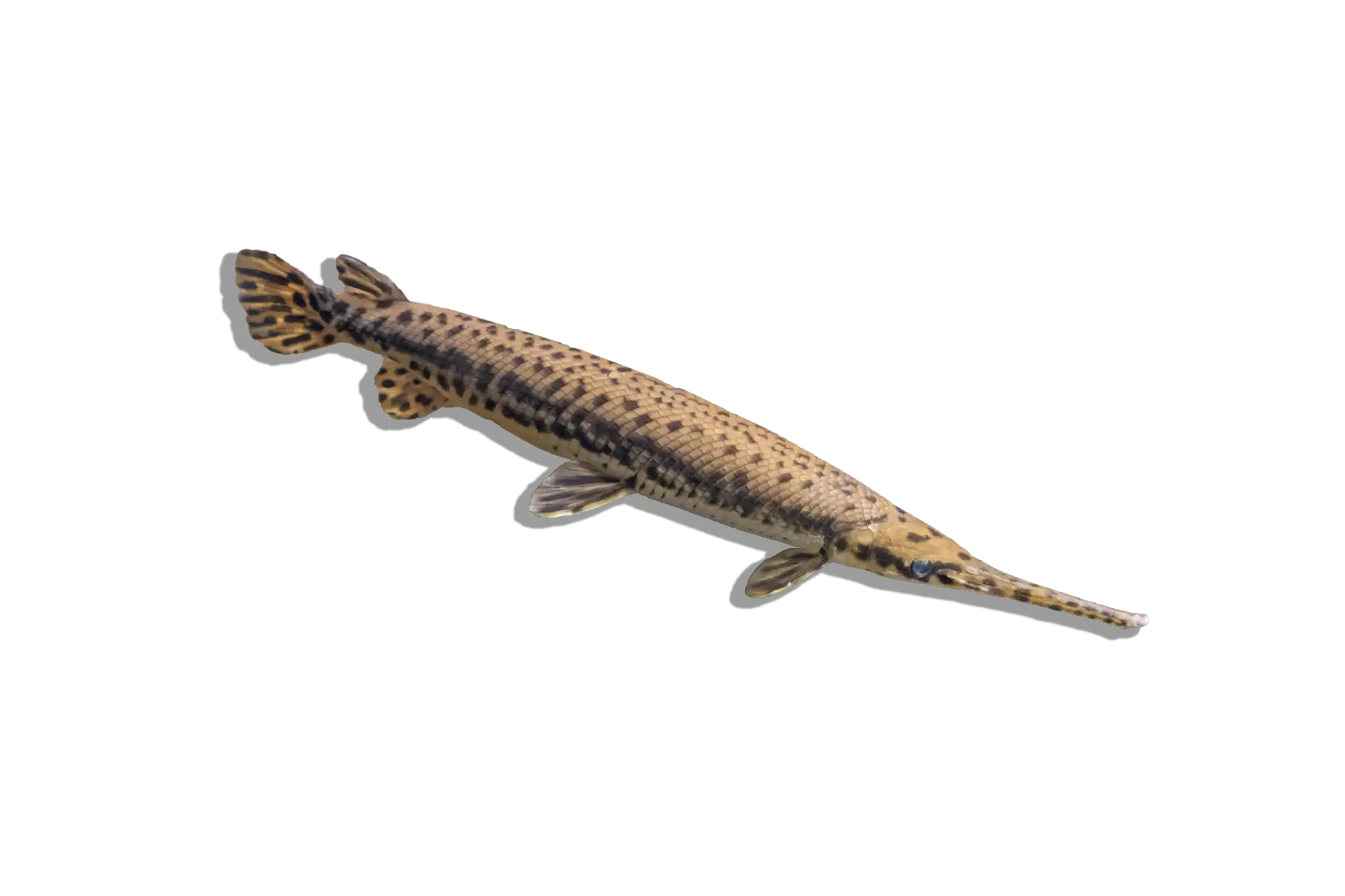
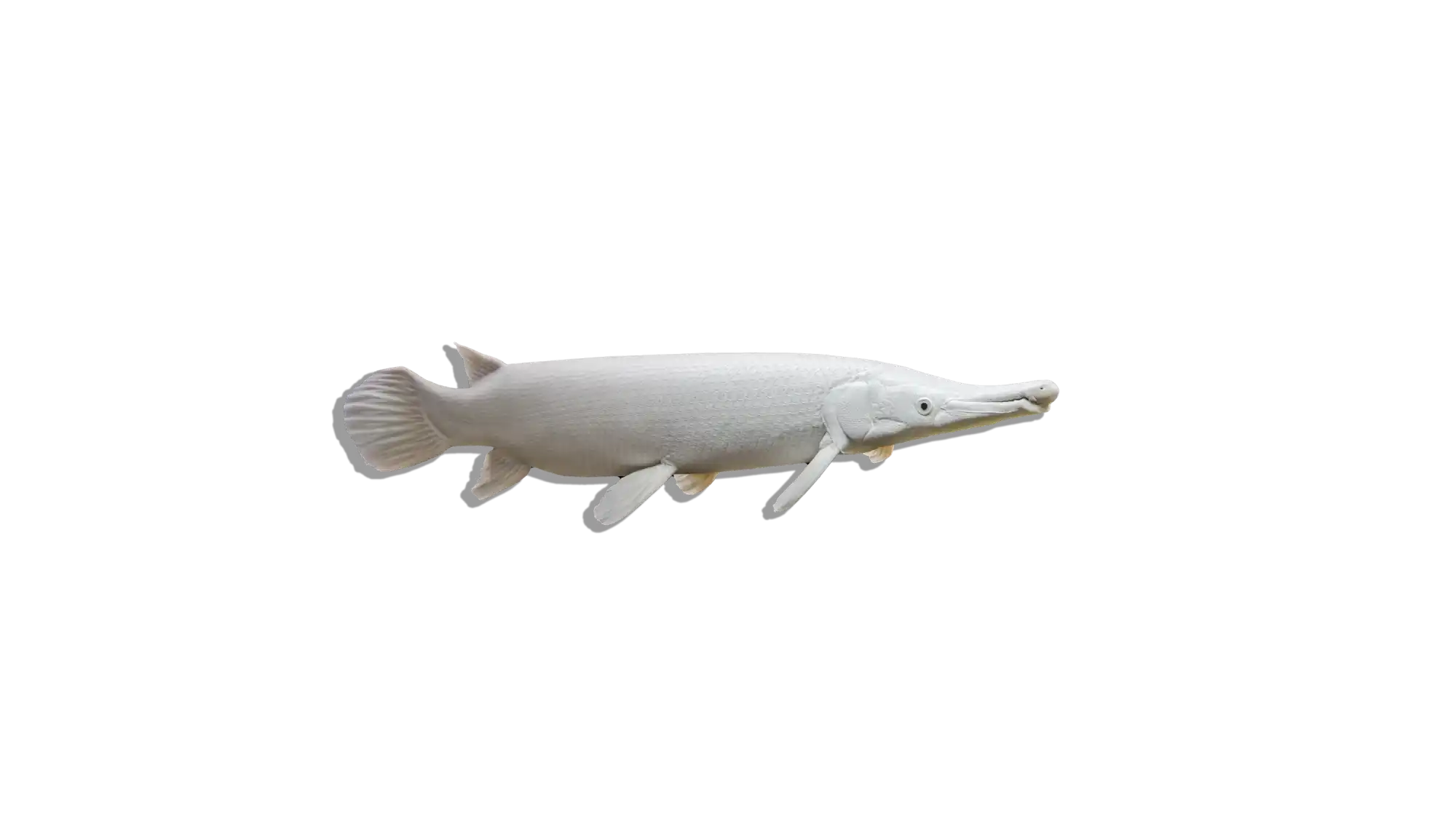
The Longnose Gar is a North American gar with a long, cylindrical body, armor of hard, diamond-shaped ganoid scales and a narrow snout lined with sharp teeth. The snout is more than twice the length of the rest of the head, which separates it from every other gar. Adults are olive brown to green above and pale below, with dark spots on the body and on the dorsal, anal and tail fins. The fish on this listing are about 5 to 8 inches.
Habitat and Distribution:
It ranges from the St. Lawrence River and the Great Lakes (except Lake Superior) south through the Mississippi basin, along the Atlantic coast from New Jersey to central Florida, and along the Gulf coast west to the Rio Grande in Texas and northeastern Mexico. Adults favor slow pools, backwaters, oxbows, reservoirs and lakes, often near vegetation or fallen timber, and they sometimes enter brackish water.
Size and Lifespan:
Females grow much larger and live longer than males. Females can pass 4.5 feet (137 cm), and the largest on record reach about 6.5 feet (2 m). Males rarely exceed 3 feet (90 cm). Young fish grow fast, about 20 inches in the first year in the wild, so plan on a fish of 3 feet or more. Females can live 20 years or more, with wild fish aged past 30, while males rarely live past 11.
Diet and Behavior:
It is an ambush predator. In the wild it feeds mostly on other fish and some crustaceans, waiting near the surface and striking sideways with a fast swipe of the snout. In the aquarium, offer thawed silversides, smelt, other whole fish, shrimp, earthworms and, once the fish accepts them, large floating or slow-sinking carnivore pellets. Skip live feeder fish, which carry disease and teach the fish to refuse anything else. It is calm toward anything too big to swallow and often more active at night. Gulping air at the surface is normal.
Breeding and Reproduction:
Spawning has not been reported in home aquariums. In the wild, adults move up into smaller, clearer streams in spring and early summer. One female is joined by several males over gravel or vegetation, and they scatter adhesive eggs with no parental care. The eggs hatch in about 3 to 9 days, depending on temperature.
Aquarium Care and Tank Requirements:
A juvenile can be grown out in a 180 gallon tank for a year or two, but an adult needs a tank or pond at least 8 feet long and 4 feet front to back. Length and width matter more than height. Use a tight, heavy lid with no gaps, since gar jump when startled or chasing food. Keep decor simple, with open water and a few smooth pieces of driftwood or plants around the edges. Use gentle flow, oversized filtration and large, regular water changes. It doesn't need tropical heat. The water temperature should be kept between 65-80°F (18-27°C), with a pH of 6.5-8.0 and moderately hard water.
Ideal Tank Mates:
Keep it only with fish too large to fit in its mouth, such as large catfish, arowanas, large bichirs, calm large cichlids and other gars of similar size. Avoid small fish of any kind, and avoid aggressive or nippy fish that will harass a slow-moving surface predator or pick at its fins.
Difficulty Level:
Advanced. It is hardy and tolerant of a wide range of water conditions, but its adult size, long life and diet of whole fish make it a fish for keepers with a very large tank or pond planned from the start.
Water Parameters:
-
Temperature: 65-80°F (18-27°C)
-
pH: 6.5-8.0
-
General Hardness (GH): 10-15 dGH
-
Carbonate Hardness (KH): Enough buffering to keep pH stable
-
Ammonia: 0 ppm
-
Nitrite: 0 ppm
-
Nitrate: <20 ppm (regular water changes required)
Additional Information:
- Its swim bladder is connected to the throat and works like a simple lung, so it can gulp air and survive in warm, low-oxygen water.
- Newly hatched larvae hang from plants by a sticky pad on the snout until the yolk is used up.
- Gar roe is toxic to people and should never be eaten.
Restrictions:
Banned or permit required in Arizona, California, Colorado, Connecticut, Hawaii, Idaho, Maine, Massachusetts, Nevada, New Mexico, Oregon, Utah, Washington and Wyoming. Check your state's rule in our list of illegal fish by state.