Common Name: Firewood Catfish
Scientific Name: Sorubimichthys planiceps (Spix & Agassiz, 1829)
Other Names: Planiceps Catfish, Peixe-lenha, Doncella, Paletona, Cabo de Hacha
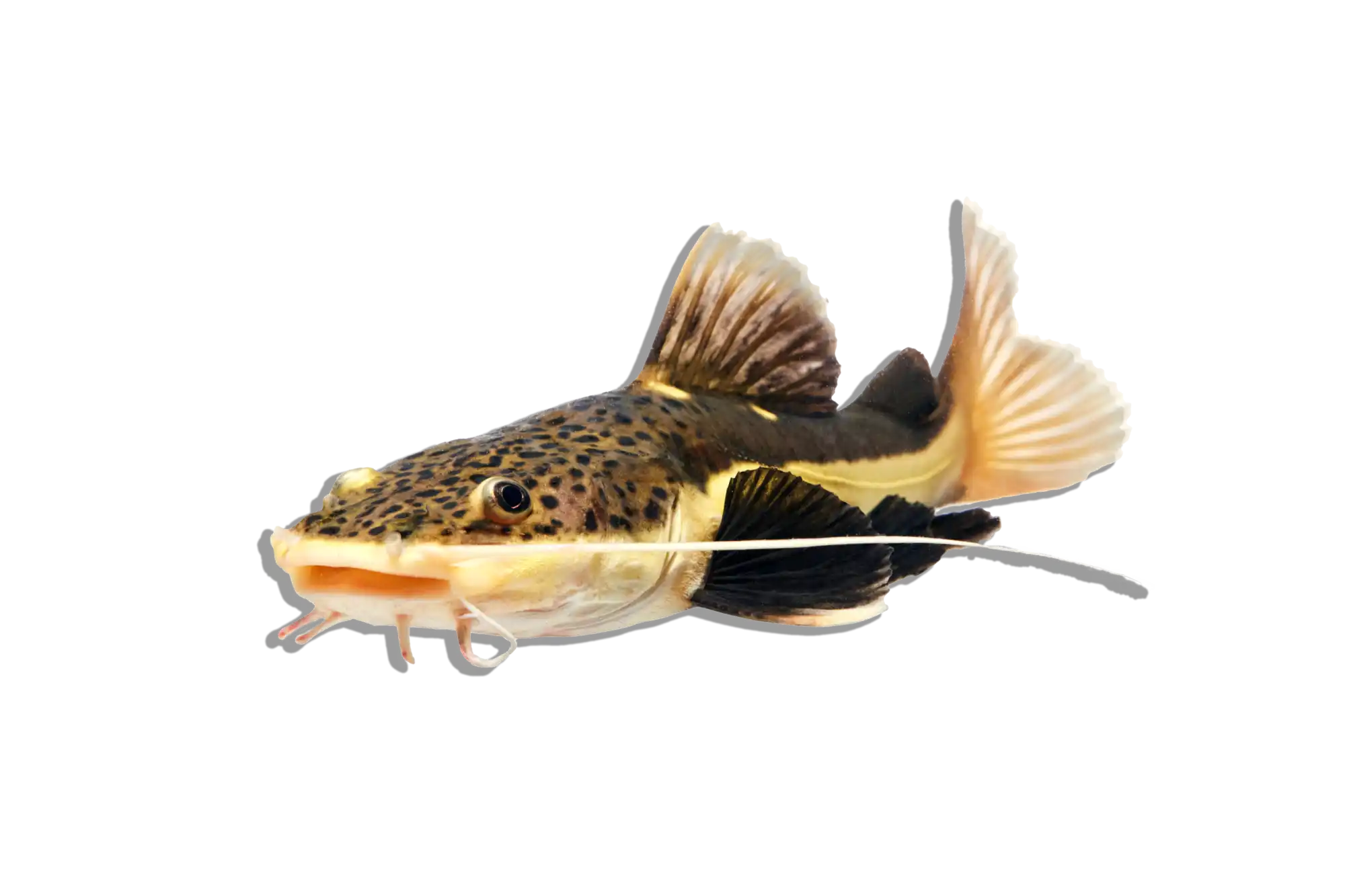
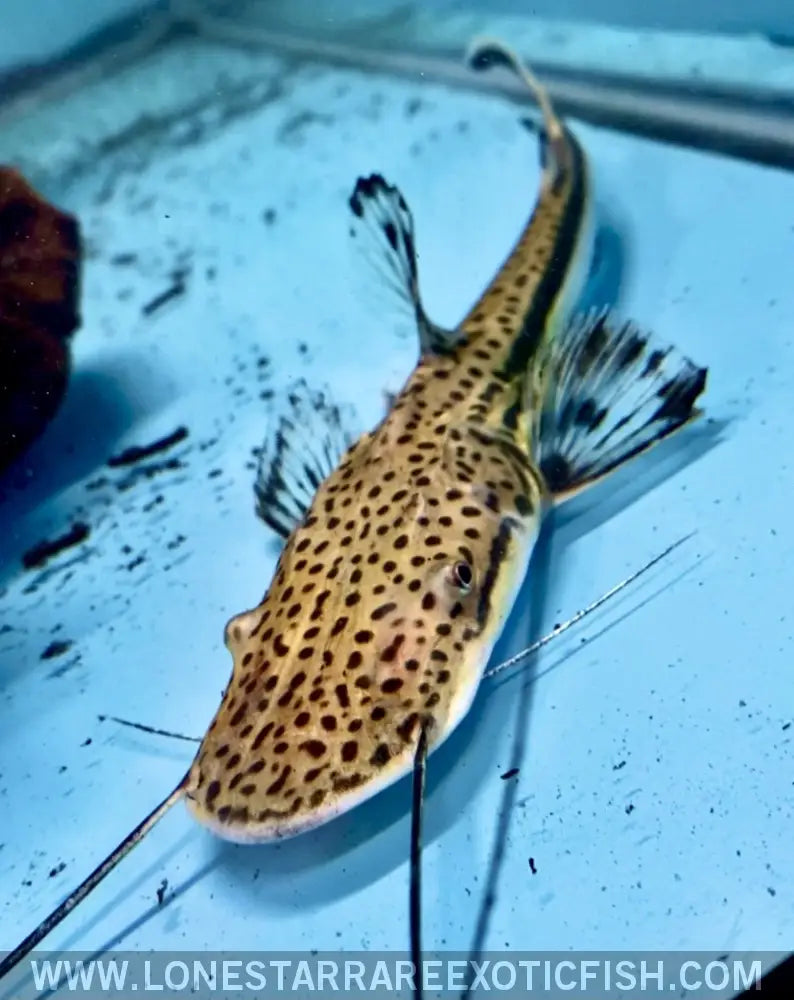
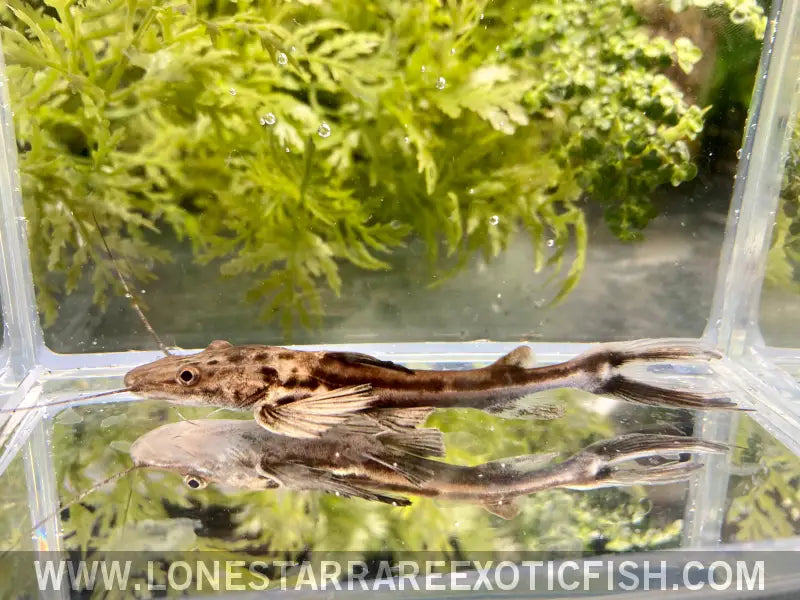
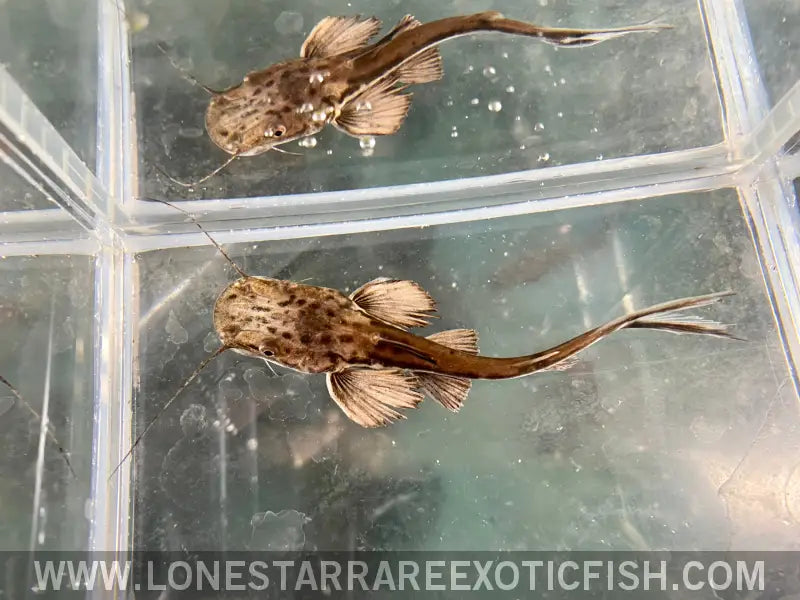
The Firewood Catfish is a giant South American predator from the long-whiskered catfish family, Pimelodidae. It has a long, cylindrical body, a very flat head and a large, long tail fin, and in big adults the upper jaw reaches past the lower one. Color varies a lot across its range, but most fish show a broad cream stripe running from the gill cover to the base of the tail, sometimes edged with darker stripes. The fish on this listing are offered at about 3 to 4 inches and 10 to 12 inches.
Habitat and Distribution:
It lives in the Amazon and Orinoco basins of South America. Records include the middle Amazon (Solimões), Purus, Putumayo and Japurá (Caquetá) rivers in the Amazon system, and the Guaviare and Meta rivers in the Orinoco system. It is normally found in whitewater rivers, which carry a heavy load of suspended sediment.
Size and Lifespan:
It can reach 59 inches (150 cm) in standard length, which is measured without the tail fin. Fish of about 5 feet (1.5 m) have been reported from the Amazon and about 5.2 feet (1.6 m) from Puerto López in Colombia. Commercial catches now average under 39 inches (1 m). No reliable lifespan figure has been published for the species.
Diet and Behavior:
It is a predator that eats other fish. In the aquarium, offer whole thawed fish such as silversides and smelt, along with shrimp and, once the fish accepts them, large sinking carnivore pellets. Skip live feeder fish, which can carry disease. Any tankmate small enough to swallow whole will be eaten, so choose companions by size first.
Breeding and Reproduction:
Breeding has not been reported in aquariums. In the wild, young fish appear at the start of the rainy season. Females are reported to grow larger, but there is no known way to sex them.
Aquarium Care and Tank Requirements:
With an adult size close to 5 feet, it needs a massive aquarium or indoor pond. Use a sand substrate with large stones and driftwood for hiding places. Provide strong water flow and high oxygen levels, along with oversized filtration and large, regular water changes to handle the waste of a big predator.
Ideal Tank Mates:
Keep it only with fish that share its water needs and are too large to be swallowed whole. Other large catfish from the Pimelodidae and Doradidae families are the best match, such as tiger shovelnose and granulated catfish. Avoid any fish small enough to fit in its mouth.
Difficulty Level:
Advanced. It is a giant predatory catfish that needs a massive tank, strong current, high oxygen and a diet of whole fish, so it suits keepers who have the space planned from the start.
Water Parameters:
-
Temperature: 75-82°F (24-28°C)
-
pH: 6.0-7.6
-
General Hardness (GH): No published range; keep it stable
-
Carbonate Hardness (KH): Enough buffering to keep pH stable
-
Ammonia: 0 ppm
-
Nitrite: 0 ppm
-
Nitrate: <20 ppm (regular water changes required)
Additional Information:
- It is taken by commercial fisheries in South America.
- In Brazil it is called peixe-lenha, which means "firewood fish."
- It goes by many local names across its range, including doncella and paletona in Venezuela, cabo de hacha in Colombia and acha cubo in Peru.