Common Name: Tigrinus Catfish
Scientific Name: Brachyplatystoma tigrinum
Other Names: Zebra Shovelnose, Tiger-striped Catfish, Zebra or Zebrinha (Brazil)
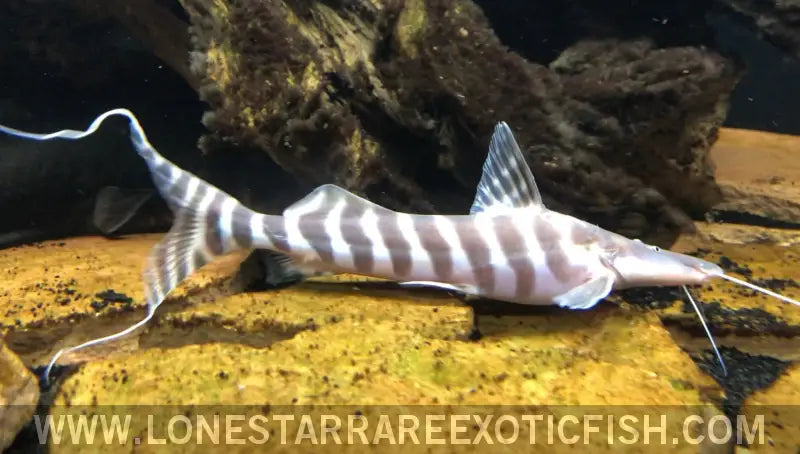
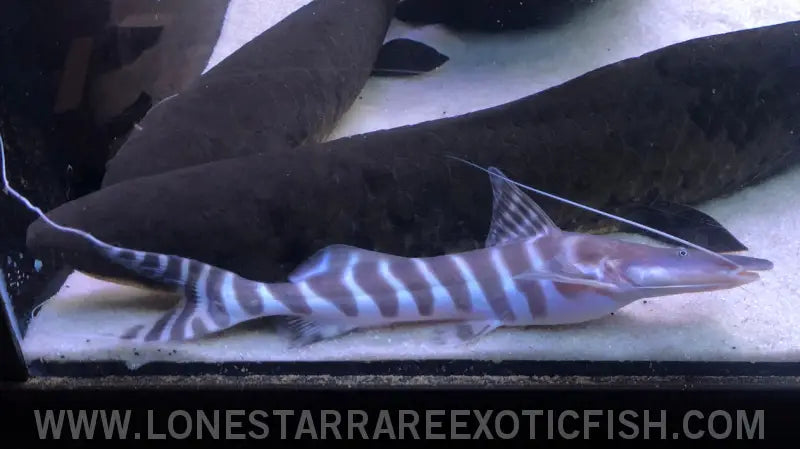
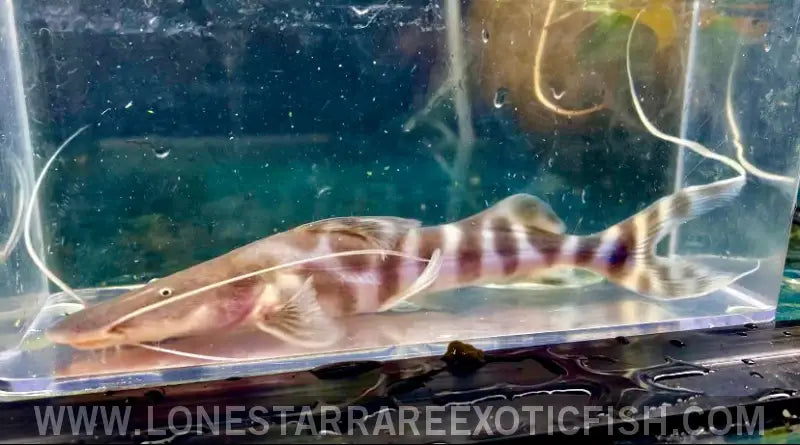
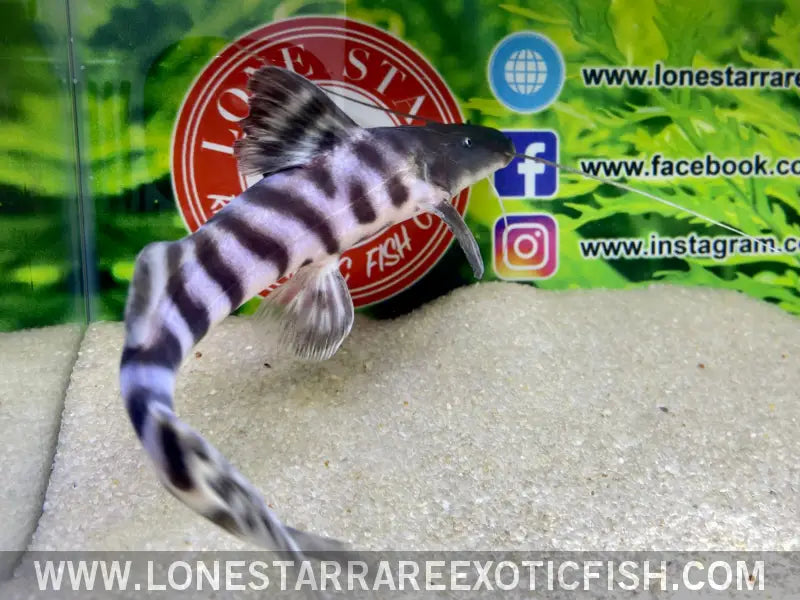
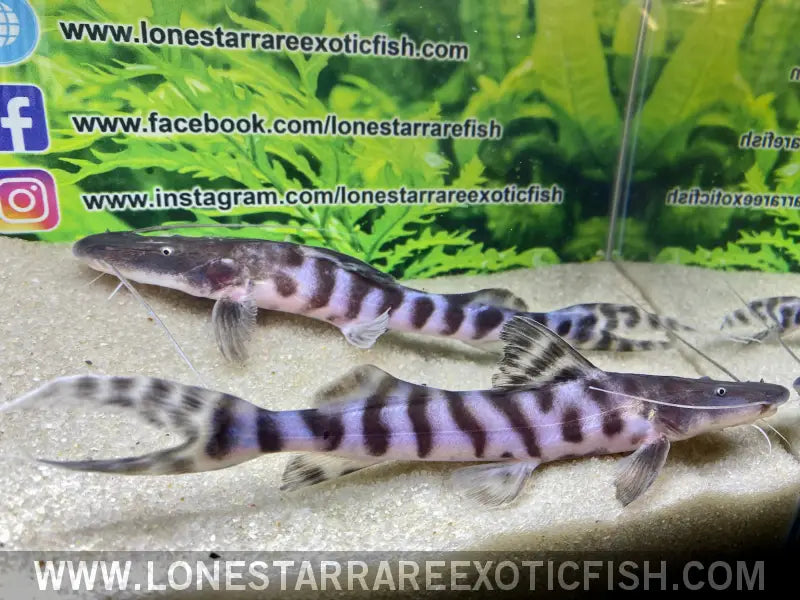
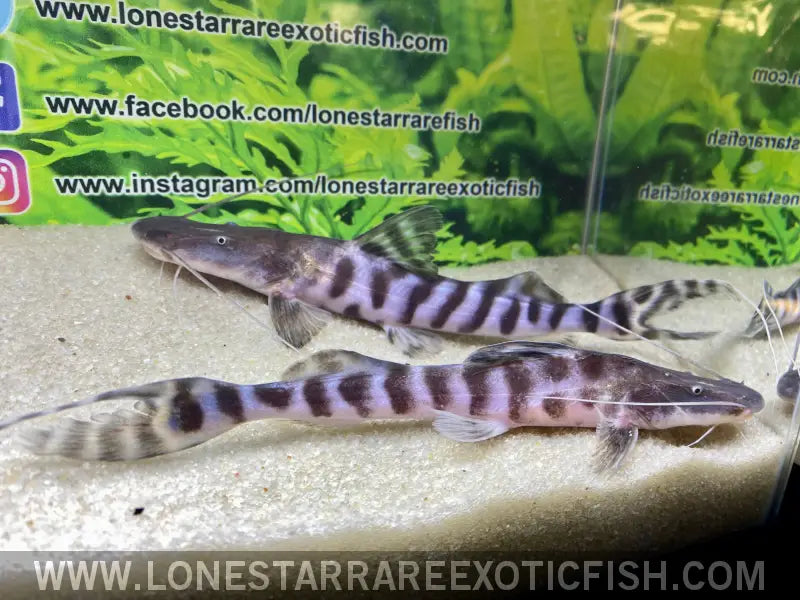
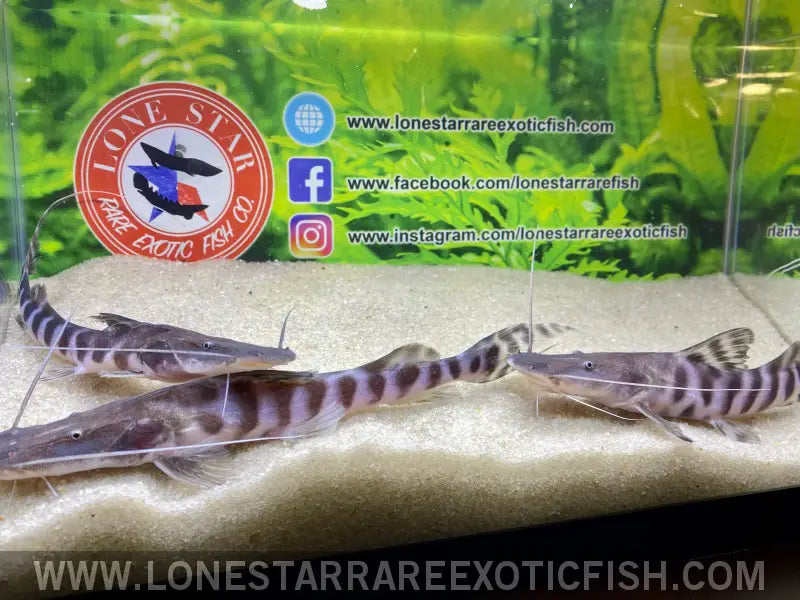
The tigrinus catfish (Brachyplatystoma tigrinum, formerly Merodontotus tigrinus) is a large, predatory Amazon catfish known for the narrow dark bars and stripes on its cream to pale-yellow body, with barred fins to match. It has a long, streamlined body and a long, slightly flattened head that narrows to the snout, with the upper jaw projecting past the lower. Its mouth holds many small teeth arranged in bands (tooth plates). Small juveniles may show spots or a pale, unbanded pattern, and the stripes develop with growth. Most aquarium specimens are wild-collected juveniles from around Iquitos, Peru, often grown on in holding facilities before export.
Habitat and Distribution: The tigrinus catfish is known only from the Amazon basin, mainly the upper and western Amazon in Brazil, Colombia and Peru, and it has also been recorded from Ecuador and Bolivia. Its range includes the Madeira, Solimões, Japurá/Caquetá, Putumayo, Marañón and Ucayali systems. Adults live in the main channels of large rivers, often near rapids and cataracts and along eroding outer river bends with sunken wood. These are warm, fast-flowing, sediment-rich "whitewater" rivers, although the species is sometimes found in clearwater rivers too. Scientists class it among the Amazon's long-distance migratory catfishes, moving more than 1,000 km (about 600 miles) between feeding and spawning areas, though it is less studied than its larger relatives.
Size and Lifespan: Tigrinus catfish usually grow up to about 2 feet (60 cm). The largest wild record is about 33 inches (85 cm) and 11.5 lb (5.2 kg). Hobbyists have reported captive fish of 25-32 inches. There's no scientific lifespan study for this species, but keepers have reported individuals living 13 years or more, so treat this fish as a long-term commitment.
Diet and Behavior: In the wild, it is almost entirely piscivorous (it eats other fish). In captivity, feed meaty foods such as shrimp or prawn, mussels, squid, whitebait and strips of white fish. Pieces of marine fish are safer than freshwater fish because they're less likely to carry parasites. New imports can be reluctant to take dead food at first and may need live fish before they're weaned onto pieces of fish. Adults need feeding only once or twice a week; don't overfeed. Tigrinus catfish are active swimmers and prefer strong currents. This is a predator that will eat any tankmate it can swallow. It's strongly cannibalistic, so keep one per tank (exporters bag juveniles individually for this reason). Occasional territorial behavior has been seen, and it may compete for space with other large catfish.
Breeding and Reproduction: No captive breeding of the tigrinus catfish has been reported. In the wild, it spawns around the end of the low-water season, as the rivers begin to rise.
Aquarium Care and Tank Requirements: Plan on at least 200 gallons for an adult, in a tank at least 6 ft long and 2 ft front to back, and bigger is better. Heavy filtration, strong flow and very high dissolved oxygen are essential. Use sand or fine gravel with a few stones and driftwood (or a bare bottom), and keep the lighting dim. The water temperature should be kept between 75-82°F (24-28°C), with a pH of 6.5-7.5 (near neutral; wild water is about pH 7). Keep ammonia and nitrite at zero and nitrate low with weekly water changes of 50-70%. Keepers find tigrinus less forgiving of stress than other big catfish, so have the tank ready, with strong flow, high oxygen and clean water, before it arrives.
Ideal Tank Mates: Large, robust fish that are too big to swallow and also like strong current, such as large plecos (loricariids) or large characins. Other big catfish can work but may compete for space. Never keep two tigrinus together.
Difficulty Level: Moderately difficult, and not a beginner fish. The challenges are tank size, very strong flow and high oxygen, getting new imports feeding, and never housing this predatory catfish with anything it can swallow.
Water Parameters:
- Temperature: 75-82°F (24-28°C)
- pH: 6.5-7.5
- General Hardness (GH): 2-12 dGH
- Carbonate Hardness (KH): Enough buffering to hold pH steady near neutral
- Ammonia: 0 ppm
- Nitrite: 0 ppm
- Nitrate: <20 ppm (50-70% weekly water changes)
Additional Information:
The tigrinus catfish is highly sought after by aquarium hobbyists for its striking pattern, and it is one of Peru's highest-priced ornamental fish exports.
It is often confused with the "false tigrinus" (Brachyplatystoma juruense). Once the adult pattern develops, true tigrinus has crisper, higher-contrast stripes that are narrow and mostly unbroken, while juruense has broader, less defined bands that are more often broken up. Tigrinus also has a slimmer body and longer barbels (whiskers). Small juveniles of both species are often spotted, so young fish are harder to tell apart.
Adults are eaten locally in the Peruvian Amazon, but catches are small (usually no more than 1-3 fish per fishing trip). It is listed as Least Concern on the IUCN Red List (assessed 2020) and is not CITES-listed, although Ecuador lists it as Vulnerable nationally.
Quarantine new arrivals and check for Argulus (fish lice), which has been recorded on pond-raised tigrinus in Peru.